
So, is hyaluronic acid filler safe? When administered by a qualified medical professional in a licensed clinical setting, HA fillers are generally regarded as a safe, well-studied option in aesthetic medicine — most patients experience only mild, temporary side effects. As with any injectable treatment, some risk remains, and outcomes depend heavily on the practitioner’s training and clinical judgement, which this article explores in detail below.
Hyaluronic acid fillers are one of the most widely used aesthetic treatments worldwide. Administered as injectable dermal fillers, they are used to restore facial volume, smooth deeper lines and folds, and refine facial contours. Common treatment areas include the cheeks and mid-face, the jawline and chin, the lips, under-eye hollows, and the temples.
HA fillers are frequently used to address age-related volume loss, soften nasolabial folds, improve facial symmetry, and achieve a more defined v-shaped face. Their versatility across multiple areas of the face is one of the reasons they remain a widely used option in medical aesthetics.
Hyaluronic acid is a substance naturally present in the human body. It is found in the skin, connective tissues, and eyes, where it plays a role in maintaining hydration and structural support. This natural presence contributes to the biocompatibility of HA-based dermal filler products, meaning the body generally tolerates them well.
That said, all injectable treatments carry some degree of risk. Understanding the safety profile of hyaluronic acid fillers, the common side effects, the rare but serious complications, and the factors that most influence outcomes is an important part of making an informed decision about the treatment.
How HA Fillers Address Wrinkles and Fine Lines
One of the most common reasons patients consider HA fillers is to reduce the appearance of wrinkles and fine lines. As the skin ages, it loses both collagen and hyaluronic acid naturally, leading to a gradual reduction in volume and elasticity. This volume loss is what causes deeper facial folds, such as nasolabial lines and marionette lines, as well as finer creases across the cheeks and around the mouth.
HA fillers work by restoring volume beneath the skin’s surface. When injected into the dermis or subdermis, the gel integrates with existing tissue and draws water to the area, creating a plumping effect that smooths out lines from underneath. Because hyaluronic acid is naturally hydrophilic, it attracts and retains moisture, which may lead patients to notice some smoothing effect and improved skin quality in the weeks following treatment.
The degree of improvement depends on the depth and location of the lines, the type of HA filler used, and the injection technique. Superficial fine lines may respond to softer, thinner formulations, while deeper folds typically require denser gels placed at greater depth. A qualified injector will select the appropriate product and placement for each area being treated.
Why HA Fillers Are Generally Considered Safe
In Singapore, dermal fillers are classified by the Health Sciences Authority (HSA) as Class D medical devices. This is the highest risk classification for medical devices and means that HA fillers are subject to stringent regulatory requirements, including product registration, dealer licensing, and mandatory adverse event reporting.
Beyond Singapore, hyaluronic acid fillers have also received regulatory approval from international bodies for specific cosmetic and medical indications. Their safety profile is supported by a substantial body of clinical research spanning more than two decades, as well as extensive real-world use across millions of treatments globally.
Because hyaluronic acid is a naturally occurring molecule in human tissue, injectable HA is generally well-tolerated. The body recognises it as a familiar substance rather than a foreign material, which reduces the likelihood of immune-mediated reactions compared to some other injectable agents.
A notable safety feature of hyaluronic acid fillers is that they are biodegradable. The body gradually breaks down the injected HA over time through natural enzymatic processes. Importantly, if complications arise or the aesthetic result is unsatisfactory, HA fillers can be dissolved using an enzyme called hyaluronidase. This provides a degree of clinical reversibility that is not available with permanent or semi-permanent fillers, and represents a meaningful safety consideration for patients weighing their options.
Common Side Effects of Hyaluronic Acid Fillers
Most side effects associated with HA fillers are mild, localised to the injection site, and resolve within a few days without medical intervention. Research published in Clinical Interventions in Aging confirms that the most frequently reported adverse events are temporary and localised in nature.
Commonly reported effects include:
- Swelling and oedema at or around the injection site, which typically subsides within 24 to 72 hours.
- Redness (erythema) and warmth in the treated area, usually resolving within a day or two.
- Tenderness or mild pain at the injection site, which is generally short-lived and manageable without medication.
- Bruising, which is more likely in areas with higher vascularity such as the lips and the under-eye region. In some cases, bruising in these areas may take up to 14 days to resolve completely.
- Itching, which may occur transiently in some individuals following injection.
These effects are generally expected as a normal tissue response to the injection process itself. They are not typically indicative of a complication, and in most cases they resolve on their own without any specific treatment.
Serious Risks and Rare Complications
While serious complications from dermal filler treatments are uncommon, patients should be aware of them as part of making a fully informed decision. Transparency about these risks is a sign of responsible clinical practice, not a reason for alarm.
Vascular occlusion is one of the most serious potential complications. It occurs if filler material is inadvertently injected into or compresses a blood vessel, restricting blood flow to the surrounding tissue. If not identified and managed promptly, this can lead to tissue necrosis. In very rare cases, vascular complications involving vessels supplying the retinal area have been associated with vision impairment or blindness. This risk underscores why detailed knowledge of facial vascular anatomy is critical for any practitioner administering dermal fillers.
As with any injectable procedure, there is a small risk of infection if sterile technique is not rigorously maintained throughout the treatment process.
Severe allergic reactions are rare with HA fillers, given the biocompatibility of hyaluronic acid. However, hypersensitivity reactions can occur in a small number of individuals. Patients with known allergies should always disclose these to their treating doctor prior to treatment.
In some cases, small lumps or nodules can form at the injection site. These may be inflammatory or non-inflammatory in nature and are typically manageable with appropriate clinical intervention. In uncommon cases, delayed inflammatory nodules can appear weeks or months after treatment. While the overall incidence is low, any new firmness, tenderness, or visible changes in a previously treated area should be discussed with a medical professional promptly.
Overfilling is a technique and judgement-related outcome rather than a biological complication. It occurs when excessive volumes of filler are administered without adequate consideration of facial proportions, resulting in an unnatural or distorted appearance. This is avoidable with appropriate treatment planning, clinical restraint, and a clear understanding of facial balance and structure. At TruGlow, our doctors exercise careful clinical judgement and treat conservatively, recommending only what is appropriate for your facial anatomy and ageing pattern. The aim is always balanced, elegant results that preserve your individuality, never an overfilled or exaggerated appearance.
It is worth noting that HA fillers are temporary by nature. Depending on the product, treatment area, and individual metabolism, results typically last between six and eighteen months before the body naturally breaks down the injected material. This temporary nature, combined with the ability to dissolve HA fillers with hyaluronidase if needed, means that outcomes are never permanent, which is itself a safety advantage.
When to Exercise Caution or Avoid Treatment
There are circumstances where HA filler treatment may not be appropriate, or where additional caution is warranted. Being aware of these helps both patients and practitioners make safer decisions.
- Inform your provider of all known allergies, including any sensitivity to lidocaine, a local anaesthetic commonly included in filler formulations, or to any other components of the product.
- Active skin infections, cold sores, or inflammatory skin conditions in or near the intended treatment area should be fully resolved before proceeding with injection.
- Individuals with autoimmune conditions should discuss these with their doctor prior to treatment. Immune responses to injectable treatments may be less predictable in these individuals, and the treating doctor needs this information to assess suitability and manage expectations.
- HA fillers are not recommended during pregnancy or breastfeeding, as adequate safety studies in these populations have not been conducted.
- Fillers should never be purchased online for self-administration. Treatments should only be carried out in a licensed medical setting by a qualified medical professional. Procedures performed in non-medical environments, such as private residences or hotel rooms, carry significantly elevated risks of infection, incorrect product use, and lack of access to emergency management if complications arise.
The Role of Your Provider in Keeping You Safe

The safety of any HA filler treatment is heavily influenced by the skill, training, and clinical judgement of the administering doctor. Choosing the right provider is one of the most meaningful decisions a patient can make in the process.
A qualified medical professional brings detailed anatomical knowledge that directly informs safe injection depth, placement, and technique. This knowledge is what reduces the risk of vascular complications and other serious adverse events. It is not something that can be substituted with product familiarity alone.
An experienced injector will also conduct a thorough pre-treatment assessment. This includes taking a full medical history, discussing the patient’s goals and expectations, explaining both the benefits and the risks of treatment, and providing clear aftercare instructions. Each of these steps contributes to a safer and more considered treatment experience.
Choosing a licensed, appropriately trained medical professional, rather than simply opting for the most convenient or most affordable option, is one of the most important steps a patient can take to protect their own safety when considering hyaluronic acid fillers or any other dermal filler treatment.
Considering HA Fillers at TruGlow
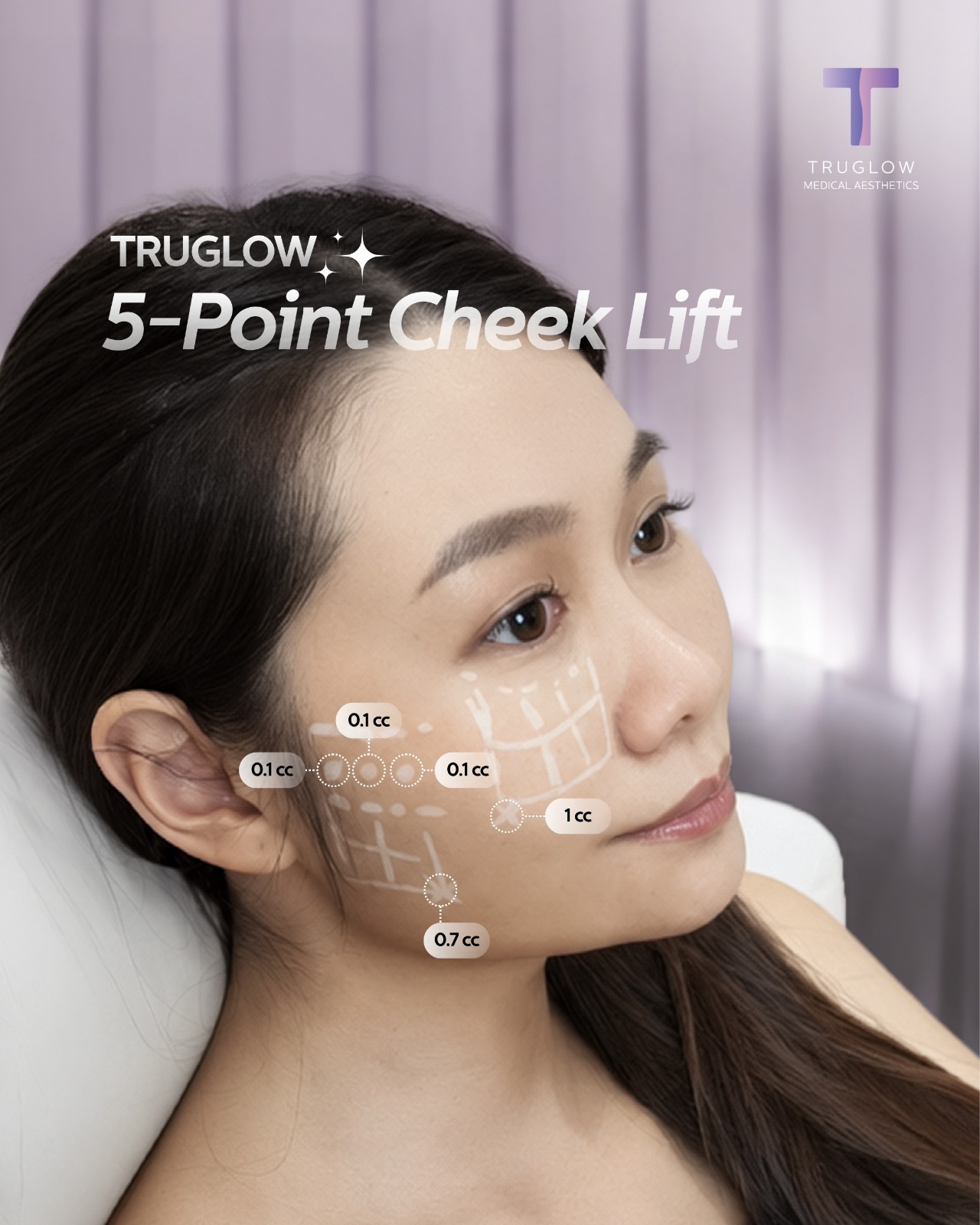
At TruGlow, the approach to hyaluronic acid filler treatment is grounded in the same principles discussed: thorough patient assessment, detailed anatomical knowledge, and a genuine regard for safety at every stage.
HA fillers can address a variety of concerns. Patients dealing with saggy skin and jowling may benefit from strategic volume replacement along the jawline and mid-face. TruGlow uses a structured 5-Point Cheek Lift technique that targets five key areas of the cheek to help restore contour and support. Those seeking a more defined v shape face often find that targeted filler placement along the jaw and chin may help create a slimmer, more contoured profile. In each case, the goal is natural-looking results that are proportionate to the individual.
Treatment at TruGlow is never about simply filling. It is about restoring balance and confidence in a way that is thoughtful, measured, and right for each patient. Every treatment plan begins with a detailed consultation to understand what each patient hopes to achieve and whether HA fillers are the appropriate route to get there.
If you have questions about the safety of HA fillers, or would like to understand your own suitability for treatment, book a consultation at TruGlow.
Frequently Asked Questions
Is hyaluronic acid filler safe?
HA fillers are generally considered safe and are one of the most extensively studied aesthetic treatments available. In Singapore, they are classified as Class D medical devices by the HSA, the highest risk classification, which means they are subject to stringent regulatory approval before they can be used. Most side effects are mild and temporary. Serious complications are rare but possible, which is why treatment should always be carried out by a qualified medical professional.
What are the most common side effects of HA fillers?
The most common hyaluronic acid filler side effects are mild swelling, redness, tenderness, bruising, and itching at the injection site. These are normal tissue responses to injection and typically resolve within a few days without intervention. Bruising may last slightly longer in highly vascular areas such as the lips or under-eye region.
Can HA fillers be reversed?
Yes. One of the key safety advantages of hyaluronic acid fillers is that they can be dissolved using an enzyme called hyaluronidase. If a complication occurs or the result is unsatisfactory, a trained medical professional can administer hyaluronidase to break down the filler. This degree of reversibility is not available with permanent or semi-permanent filler types.
How do I choose a safe provider for dermal filler treatment in Singapore?
Look for a licensed medical professional with specific training and experience in injectable treatments. A qualified provider will conduct a thorough consultation, take a full medical history, explain both the benefits and the risks, and perform the treatment in a proper clinical setting. Avoid receiving treatment from unlicensed practitioners or in non-medical environments.
Are there people who should not get HA fillers?
HA fillers are not recommended during pregnancy or breastfeeding. Patients with active skin infections, cold sores, or inflammatory conditions in the treatment area should wait until these are resolved. Individuals with autoimmune conditions or known allergies to filler components, including lidocaine, should discuss these with their doctor before proceeding.
